How to Eat An Elephant
Scrolling through my social media feed, I came across a short video, “How to do stuff when you feel paralyzed,” by a creator named Christi who goes by @HowLongDoesItActuallyTake on social media. Check it out HERE.
I immediately thought, “I should show this to my clients.”
In the video, Christi does something special. They tape a bunch of white paper on the wall to create a large grid and draw an elephant. The elephant image represents a complex, multi-step project. Next, Christi takes one of the pieces of paper off the wall. On the back is written a specific action related to the project. Their advice is to break down projects into smaller “bites” and focus on one at a time.
I love this advice. I preach this strategy vigorously. It’s intuitive and obvious once it’s explained. Of course, big tasks are made up of many smaller steps! This is not revolutionary information. Yet, I struggle to follow this advice in my own life, and I see my clients struggling too.
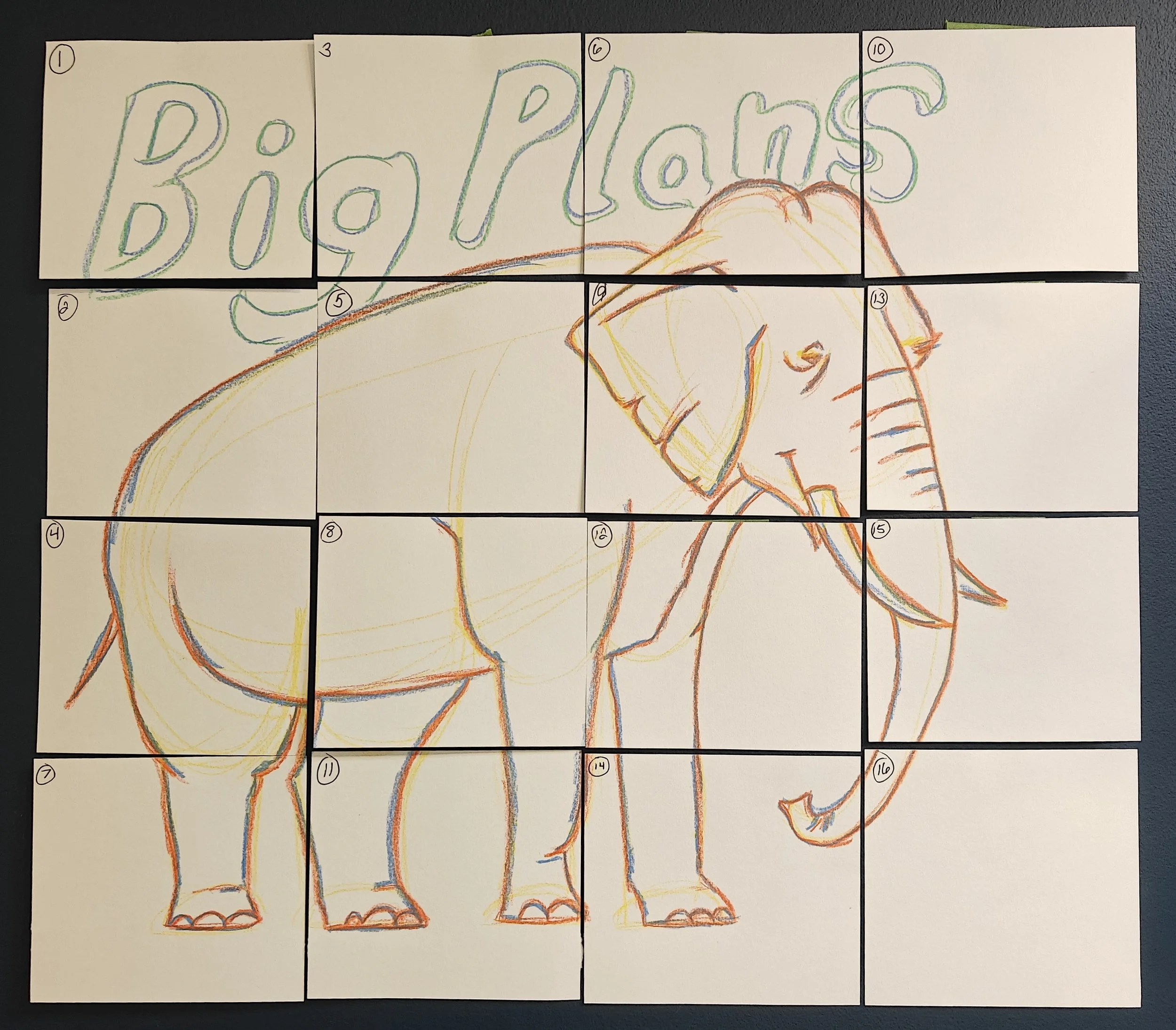
Inspired by @HowLongDoesItActuallyTake, I created my own interactive plan to re-design my garden.
So, back to Christi’s video and why I think it’s special.
It’s possible that the wall of paper with the elephant is just a fun visual aid they thought up to make their video easier to digest or more interesting to watch, but I think there is more to it. Looking at that wall of paper and knowing that a concrete, simple action is written on the other side of each sheet, I feel inspired, relieved and entertained all at once. I imagine myself enjoying the process of creating the paper grid and drawing the elephant. I imagine that flipping over the sheet of paper and completing the task would be satisfying. Should I color in the image after I complete the accompanying task?
Woah. This actually sounds fun to me.
Excuse me if this sounds too obvious, but PEOPLE LIKE TO HAVE FUN. “Fun” is rewarding. Working toward a long-term goal that involves tedious labor or abstract rewards doesn’t pull my attention as effectively as activities that are immediately rewarding. For example, I’m happy to spend 20 hours a week playing a video game because video games are intensely rewarding to my brain. The same goes for watching TV or scrolling or shopping or even eating.
When my clients ask me why they can’t seem to get motivated to work on the goals they set to improve their lives, I think about the “brain’s reward system”. I think about immediate gratification versus delayed gratification. For example, short form social media apps interface with my brain and train me to prefer looking at screens for the immediate gratification and stimulation they so efficiently provide. A consequence of this training is reduced patience and attention span. This obstacle is real and it is very powerful, so I can’t rely on sheer willpower alone to overcome this effect.
The paper elephant strategy provides something that screens cannot: a tactile experience with prompt rewards. The paper elephant is right there on the wall - big and obvious - reminding me to keep making progress. This strategy is also fueled by something more powerful than shallow immediate gratification: CREATIVITY. Instead of consuming imagery and ideas, I can create them myself and tape them to the wall.
In order to feel satisfied with my life, I require a sense of purpose, meaning, and progress. I’m deeply comforted and pleased when I have a plan to reach my goals. A clearly defined plan reduces my mental load. I spend less time wondering how and when I am going to reach my goal and more time doing the work. When I accomplish my goals and celebrate my progress, I feel empowered. I witness my capability. I know that I can do big things. I can make a difference, and that gives me hope for my future.
Your plans may seem huge - as big as an elephant, even. Feeling overwhelmed in the face of challenges is normal. People do hard, complex things all of the time, and they do it the same way you would eat an elephant. One bite at a time.
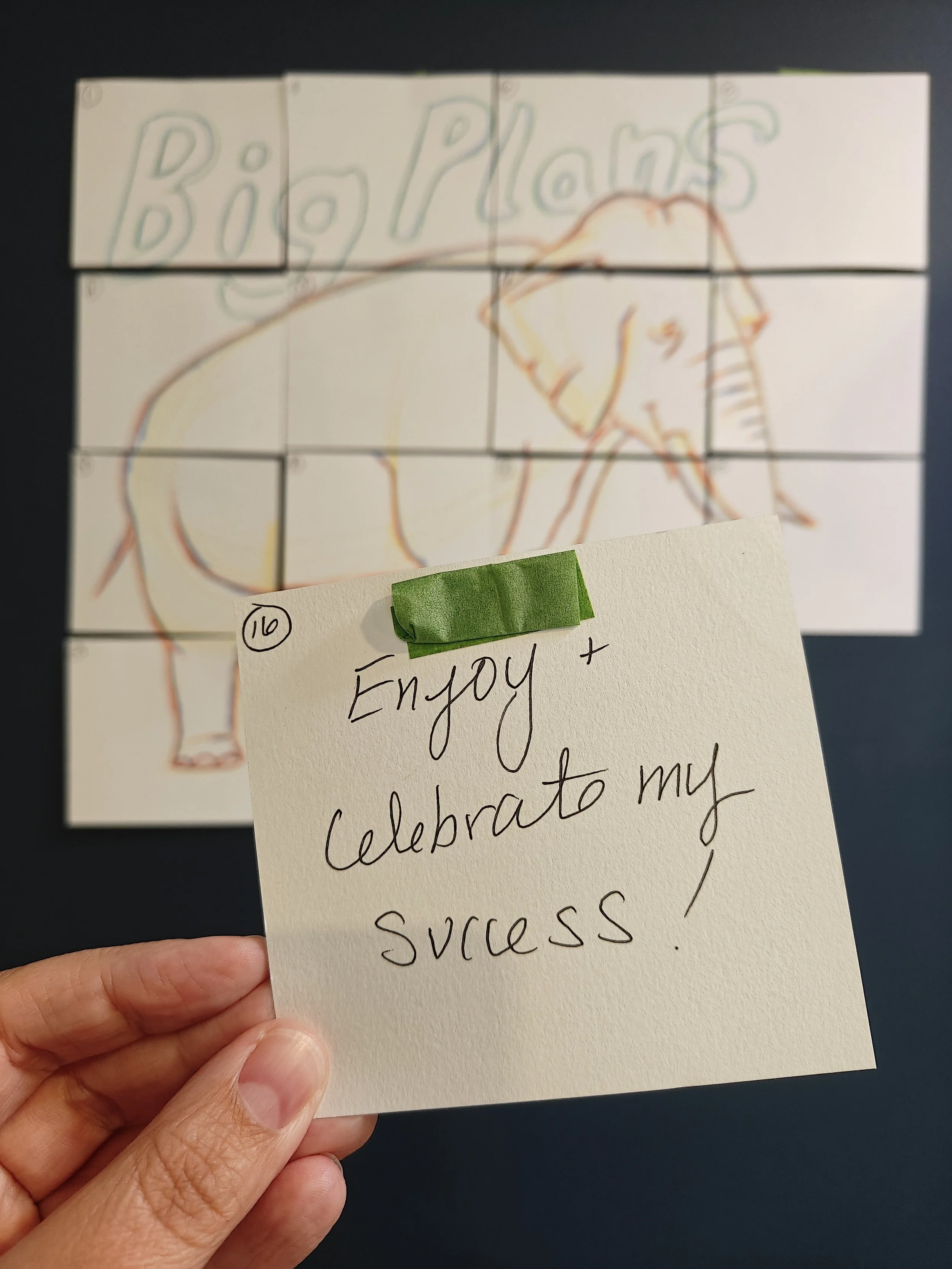
Celebrating your accomplishment is crucial step in the planning process. Give yourself credit when it’s due.